Electrical System Compliance Certificate (DIRI)
Electrical system compliance certificate: what it is, who can sign it, when you need it and how much it costs under Italian DM 37/08. A practical guide with FAQ.
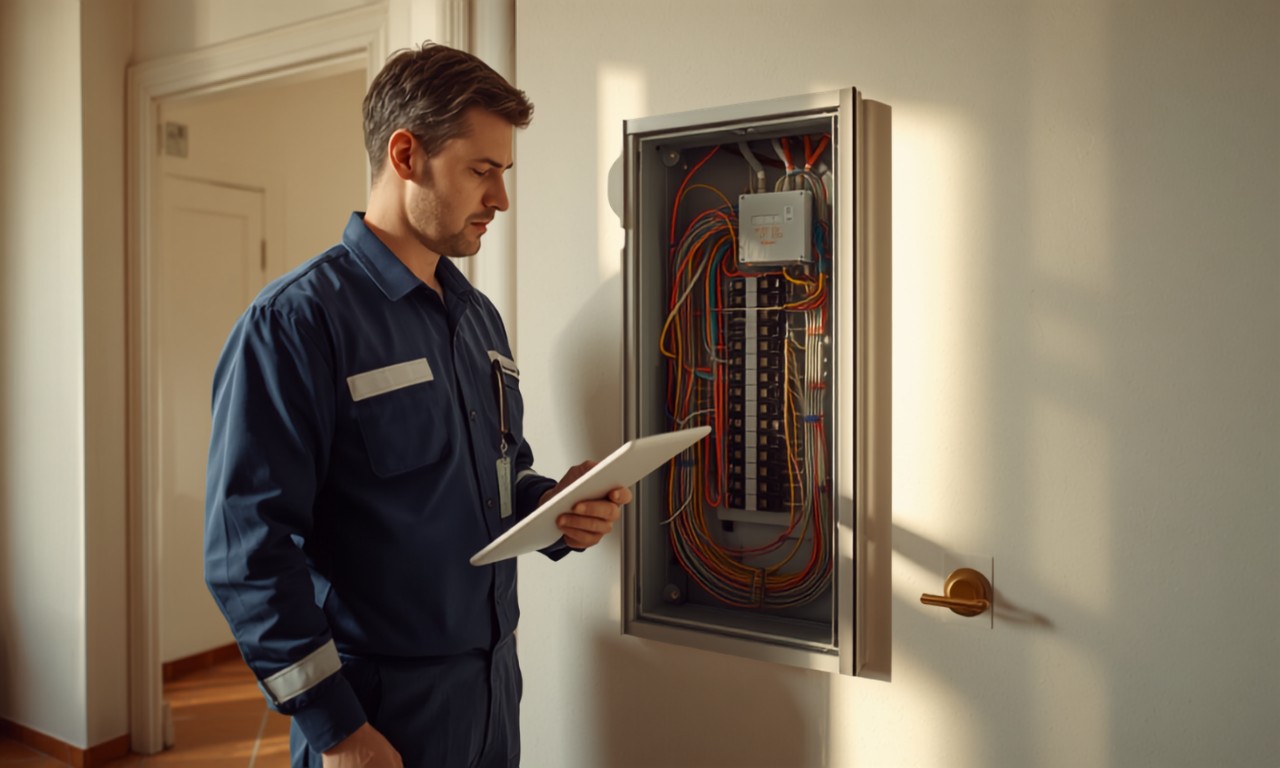
Do you have an existing electrical system with no traceable declaration of conformity, and you need to regularize it to sell a property, get a mortgage, or reopen a utility connection? In most cases the document you need isn't the DiCo (declaration of conformity) - it's the declaration of compliance, known in Italy as "dichiarazione di rispondenza" (DIRI).
In this guide you'll see what it is, who can sign it, how to obtain it, roughly how much it costs, and in which cases you need a declaration of conformity instead.
What the electrical system compliance certificate (DIRI) is
The DIRI is the document that certifies the safety of an already-existing electrical system when the original declaration of conformity is missing or can no longer be found. It's provided for under art. 7, paragraph 6 of Italian Ministerial Decree 37/08 (DM 37/08), and it's issued by a qualified technician after an on-site inspection - not by the installer who originally built the system.
Unlike the declaration of conformity, it doesn't certify work that was just completed: it certifies that an already operating system meets (or has been brought up to) minimum safety standards, even if assessed against the criteria in force at the time it was built.
The DIRI was created to solve a very concrete problem: between 1990 (the year of Law 46/90, the first comprehensive law on building systems) and 2008 (when DM 37/08 came into force), thousands of declarations of conformity were lost, amid changes in document management, closed companies and properties changing hands. Without a substitute instrument, those systems would have been stuck in a grey area, impossible to "regularize" without redoing everything from scratch.
DIRI vs. declaration of conformity: the difference in short
The main difference is when each document is used: the declaration of conformity (DiCo) certifies a new or recently modified system, the compliance certificate (DIRI) certifies an existing system for which the original DiCo is missing.
| Declaration of Conformity (DiCo) | Compliance Certificate (DIRI) | |
|---|---|---|
| When it's used | New or modified system | Existing system, DiCo missing or untraceable |
| Who signs it | The installation company that carried out the work | A qualified technician who did not carry out the work (ex-post inspection) |
| Basis of certification | Materials and work carried out directly | On-site inspection, visual check and instrument testing |
| Systems built after 27/03/2008 | Always mandatory | Cannot be used: a DiCo is required |
If you're evaluating for the first time whether you need a DiCo or a DIRI, our DiCo guide covers in detail its content, technical attachments and who can sign it for a new system.
When you need the electrical system compliance certificate
You need it whenever you have to prove an existing electrical system is up to standard and the original declaration of conformity doesn't turn up, for any reason: lost, never issued, or from a company that has since closed.
The most common situations where it's requested are:
- Selling a property, when the notary asks for system documentation at closing.
- Applying for a mortgage or a bank appraisal.
- Reopening a utility connection (gas, electricity) after a period of suspension.
- Occupancy permit procedures, where Presidential Decree 380/2001 (the Italian Building Code) requires proof of system compliance among the necessary documents.
- Rentals, when the landlord has to provide guarantees about the system's safety to the tenant.
It cannot be used for a system built or modified after 27 March 2008 (when DM 37/08 came into force): in that case the only valid document is the declaration of conformity, the responsibility of whoever carried out the work. To find out whether your home's system falls into this case, see our guide on electrical systems up to code, which explains when a system is considered compliant regardless of its age.
Who can issue the compliance certificate
Not every technician qualified to issue a DiCo can also sign a DIRI: the law requires a higher minimum level of experience, because here you're not certifying work you carried out yourself - you're assessing someone else's system after an inspection only.
DM 37/08 identifies two cases:
- Systems with no design requirement: the DIRI can be signed by the technical manager of a company qualified under art. 3 of DM 37/08, provided they have held that role for at least 5 years in the specific trade. Alternatively it can be signed by a professional registered with their professional body (engineer, industrial expert, in specific cases a qualified surveyor), again with at least 5 years of proven experience in that specific trade.
- Systems subject to a design requirement: only a professional registered with their professional body can sign it, with the same minimum 5 years of specific experience.
In practice: a newly qualified installer can sign the DiCo for a system they just installed, but they cannot sign the DIRI for an existing system they don't know, if they haven't yet built up the required seniority.
How to obtain it: inspection, checks and technical report
The DIRI isn't a form filled out at a desk - it always starts with an on-site technical inspection, never a remote self-certification.
The process generally follows these steps:
- Gathering preliminary information: the presumed year the system was built, any documents already available (diagrams, manuals, old certificates), the property's intended use.
- On-site inspection and visual check: the technician inspects the electrical panel, wiring, outlets and visible light fixtures, looking for obvious anomalies.
- Instrument testing: measuring the continuity of the protective conductor, checking that the residual-current device trips correctly, testing the earthing system with dedicated equipment.
- Comparison against the rules of the time: the system is assessed against the rules in force when it was built, not against the current CEI 64-8 standard (now in its 9th edition, November 2024) - unless the system is modified in the meantime.
- Technical report and issuance: the technician writes up a report on the outcome of the checks, attaches any available diagrams and floor plans, and stamps and signs the DIRI.
If the system isn't compliant even by the standards of its time: minimum upgrades
If anomalies come up during the inspection, the DIRI cannot be issued until they're resolved: it isn't a formality you sign regardless.
In practice, the most common reasons a 1970s-1990s electrical system needs a small intervention before it can get a DIRI are the absence of a residual-current device (the "safety switch", which became mandatory to add under Law 46/90) and a missing or non-functioning earthing system. On top of these two main issues, you often also find junction boxes without covers or damaged ones, no labelling on the electrical panel, and conductor insulation resistance below the threshold during instrument tests: these are all non-conformities commonly found on systems of that era, and they call for a targeted intervention, not a full rebuild.
If the anomalies are more extensive - a system that needs to be completely redone, for example - a DIRI no longer makes sense at that point: it's better to rebuild the system and issue a new DiCo, which also covers the parts that weren't touched.
How much the electrical system compliance certificate costs
There's no official price list: the cost depends on the size of the system, the number of electrical panels, documentation already available, and the complexity of the checks required.
As a market reference, for a standard-sized apartment the figures observed for the compliance certificate alone (inspection and instrument tests included) run roughly between €250 and €800 + VAT. The price rises for commercial properties, offices or warehouses, where more checks are required.
On top of this, if needed, come the costs of any small upgrades found during the inspection (replacing the residual-current device, restoring the earthing system): for this reason a serious quote always comes after an initial inspection, not before.
Validity: how long it lasts and when you need a new one
The DIRI has no formal expiry date: it remains valid as long as the system stays the one described in the technical report.
It loses validity (for the part concerned) the moment the system is modified: from that point you need a new declaration of conformity, not an update to the DIRI. A very common case in the field is replacing a gas boiler on a supply system older than 2008 with no DiCo: in that situation you issue a DIRI for the existing part of the system that wasn't touched and a DiCo for the work just carried out, citing the DIRI among its attachments.
A regulatory clarification: what does NOT change with DM 130/2025
DM 130/2025 updated DM 37/08, but only for letter b) of art. 1: radio and TV reception systems, telephone, data and fibre-optic systems, in connection with ultra-broadband. It doesn't affect electrical power systems or the rules on the electrical system compliance certificate, even though several online sources cite it generically as an "update on electrical systems" - that's inaccurate, and worth knowing so you don't get confused when consulting different sources.
Frequently asked questions about the electrical system compliance certificate
Can a compliance certificate be issued for a system from the 1970s or 1980s? Yes. A DIRI can be issued for any existing system that lacks a declaration of conformity, regardless of when it was built: the technician checks compliance against the minimum safety requirements in force at the time, not against current standards.
Can a surveyor (geometra) sign the compliance certificate? Only if registered with a professional body that qualifies them to design technological systems, and with at least 5 years of specific experience in the relevant trade: in most practical cases, the signature falls to engineers, industrial experts, or the technical manager of a qualified company.
How much does an electrical system compliance certificate cost? Roughly between €250 and €800 + VAT for a standard apartment, inspection and instrument tests included; more for commercial or industrial properties. The exact price only comes after an inspection.
Does the compliance certificate expire? No, it has no formal expiry date. It only loses validity if the system is modified: at that point a new declaration of conformity is required for the modified part.
Do you need a DIRI to sell a property? Often yes: if the original declaration of conformity is missing, the notary will request one at closing to certify that the property's systems are compliant.
Can I replace a boiler if the gas system has no declaration of conformity? Yes, but the technician will need to issue a DIRI for the existing part of the system not touched by the work, and a DiCo for the new part, citing the DIRI among the DiCo's attachments.
What happens if I have neither a DiCo nor a DIRI and need to sell the property? The sale can go ahead, but the lack of system documentation must be disclosed and can slow down the closing or lead the buyer to request a DIRI before proceeding: it's best to regularize the situation before putting the property on the market.
In conclusion
The compliance certificate exists to unblock very common situations - sales, mortgages, reconnections - when the only problem is a lost piece of paper, not a genuinely dangerous system. The real point of attention is choosing the right technician: they need the required 5 years of experience in that specific trade, not just in general.
For new systems, the problem is different: making sure the DiCo doesn't get lost again between the job site and the office. Clemp's compliance module drafts the declaration of conformity starting from the data the technician collects on site (photos, WhatsApp voice notes) and files it together with the system's service log, so in future you don't need to chase a DIRI for a document that actually exists - just can't be found. The signature, in any case, always remains that of the qualified technician who inspected the system.
Want to see it on your own workflow?
Free 6-week pilot with your technicians. Reply within 24 hours.