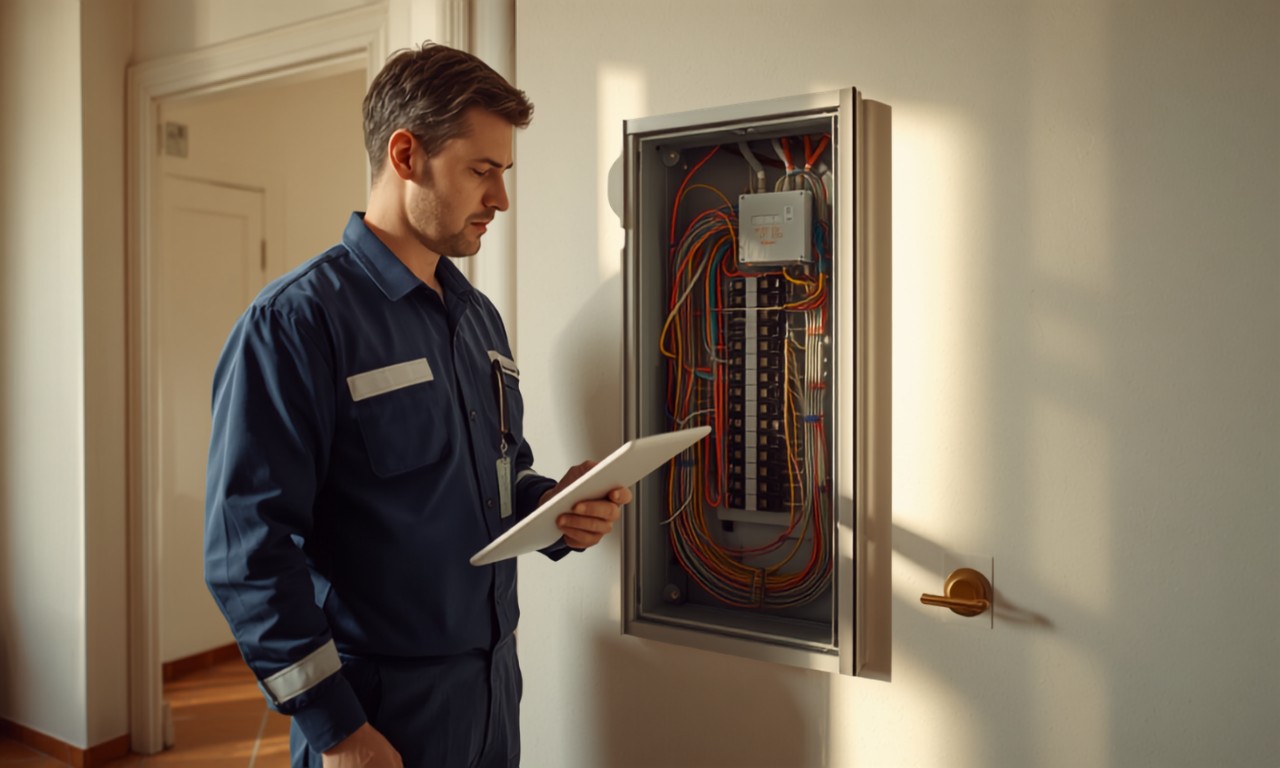
Electrical System Up to Code: 2026 Guide
What it means for an electrical system to be up to code, which laws govern it, how to check it and what the penalties are. A practical guide for technicians and property owners.

An electrical system that is up to code is one that has been designed, built and documented according to the technical rules and Italian laws in force, with a declaration of conformity that certifies it. It's not enough for it to "work": compliance concerns materials, sizing, protective devices and documentation, not just the absence of visible faults.
This guide is for anyone wondering whether their own system (home, office, shop) is up to code, and for technicians who need to explain it to a client clearly. By the end you'll know which rules apply, how a system is inspected, what incentives exist to upgrade it, and what you risk if you don't.
This isn't a purely theoretical topic: in practical terms, a non-compliant system can block a property sale, invalidate an insurance policy, or expose you to penalties in the event of an inspection or accident.
What "electrical system up to code" means
A system is up to code when it complies with DM 37/08 (design and installation to industry standards) and CEI technical standards, in particular CEI 64-8 for low-voltage systems, and is accompanied by the Declaration of Conformity (DiCo) issued by the installer. Compliance isn't a permanent state: a system built to code in 2005 may no longer be compliant today if it hasn't been updated to current standards.
The three elements that together define compliance are:
- Design and materials: certified components, sized for the actual load.
- Installation: carried out by a company qualified under DM 37/08.
- Documentation: the DiCo, and where required, the wiring diagram and technical report.
A system missing any one of these three elements isn't formally up to code, even if it shows no obvious problems.
Which rules govern an electrical system that's up to code
The two regulations to know are DM 37/08, which requires installation to industry standards and the issuance of the DiCo, and the CEI 64-8 technical standard, now in its 9th edition (November 2024), which sets the technical requirements for low-voltage systems: cable sizing, residual-current protection, safety clearances.
On top of these, Law 186/1968 first established the principle of "state of the art" for electrical materials and installations, and is still cited today as a general reference alongside DM 37/08.
One useful clarification, because it causes confusion: DM 130/2025, which came into force on 2 October 2025, amended DM 37/08 but only regarding letter b) of art. 1 - radio and TV systems, antennas, electronic equipment for TV, telephone and data signals, including fibre optics. It does not change the rules on power electrical systems covered in this guide.
How to check whether a system is up to code
The most reliable way is to have the system inspected by a qualified technician, but some signs can be observed even by non-experts:
- The electrical panel has a working 30 mA residual-current device (RCD) - check by pressing the "test" button: it should trip.
- There are no visibly damaged outlets or cables, spliced with electrical tape or missing a junction box.
- Cable sizing is adequate for the load: older systems often can't handle the consumption of a modern kitchen with several appliances running at once.
- A Declaration of Conformity exists, or in its absence a compliance certificate issued by a technician for systems built before 2008.
If even just the documentation is missing, the system is not formally up to code even when it's technically safe: without a DiCo or compliance certificate you have no way to prove it in the event of an inspection, sale or claim.
Who issues the documentation and who needs to intervene
The Declaration of Conformity can only be issued by an installation company qualified under DM 37/08, registered with the Chamber of Commerce with the required technical-professional qualifications. For existing systems without a DiCo, a qualified technician can instead issue a compliance certificate, after inspecting the system's condition.
If you want to know in detail what the document should contain, see the guide to the declaration of conformity and, for the complete form with all regulatory references, the DiCo guide. For older systems without a DiCo, see the guide to the electrical system compliance certificate.
Tax incentives for upgrading
Rebuilding or upgrading an electrical system falls under major maintenance work and therefore qualifies for the renovation bonus. For expenses incurred in 2026, the deduction is 50% on a main residence, up to a cap of €96,000 per property unit: meaning up to €48,000 in deductions, spread over ten annual instalments. For properties other than a main residence, the rate is lower - updated conditions are published by the Italian Revenue Agency.
The cap is shared with other renovation work on the same unit: if you're already using the bonus for other work, the electrical system draws on the same allowance. The work generally requires a CILA (simplified building notice) to be filed with the municipality before starting, and payment must be made via a traceable bank transfer.
What you risk if the system isn't up to code
A non-compliant system exposes you to three types of concrete, not just theoretical, consequences.
On the safety side, it increases the risk of short circuits and fires caused by electrical faults. On the penalty side, art. 15 of DM 37/08 provides for an administrative fine of €100 to €1,000 for violations of the obligations under art. 7 (issuing the declaration of conformity) and €1,000 to €10,000 for violations of the decree's other obligations, scaled according to the size and complexity of the system and its level of risk. Violations found against installation companies are reported to the relevant Chamber of Commerce and recorded in the business register.
On the practical side, an undocumented system blocks or slows down property sales and occupancy permit procedures, and can lead to an insurance claim being denied if it's connected to the system.
Frequently asked questions
Is an old electrical system automatically non-compliant? No. A system built before 2008 (before DM 37/08) can be considered up to code if accompanied by a compliance certificate issued by a qualified technician confirming its safety, without necessarily needing to be rebuilt.
Who checks whether an electrical system is up to code? There's no automatic periodic inspection for residential homes: checks typically happen at the time of a sale, renovation, occupancy permit application, or at the owner's initiative. For workplaces, checks instead follow Legislative Decree 81/08 on workplace safety.
Do you need to rebuild the whole system to bring it up to code? Not always. Often it's enough to work on the critical points - panel, RCDs, earthing - without redoing the entire wiring, if the existing cable sizing is still adequate for the current load.
Does the Declaration of Conformity expire? No, the DiCo doesn't expire, but it only remains valid as long as the system isn't substantially modified: in that case a new declaration is needed for the modified part.
What happens during a sale if the system's documentation is missing? The sale can still go ahead, but in practice the buyer (or the notary) often asks for the situation to be resolved before closing, or the price is renegotiated to cover the cost of the upgrade and missing documentation.
Keeping systems up to code without losing hours to paperwork
Inspecting and documenting a compliant system requires a site visit, precise technical data and a correctly filled-in declaration - work that often gets postponed because it has to be squeezed in between job sites. Clemp turns the voice note and photos a technician sends over WhatsApp at the end of an inspection into a structured report, with the data already ready to fill in the required documentation - with no app for technicians to install.
Want to see it on your own workflow?
Free 6-week pilot with your technicians. Reply within 24 hours.