F-Gas Certification: Guide, Regulations, Costs and Courses
F-Gas certification ("patentino F-Gas"): what it is, who needs it, how to get it under Italian DPR 146/2018 and EU Reg. 2024/573, and the role of ACCREDIA and the National F-Gas Register.

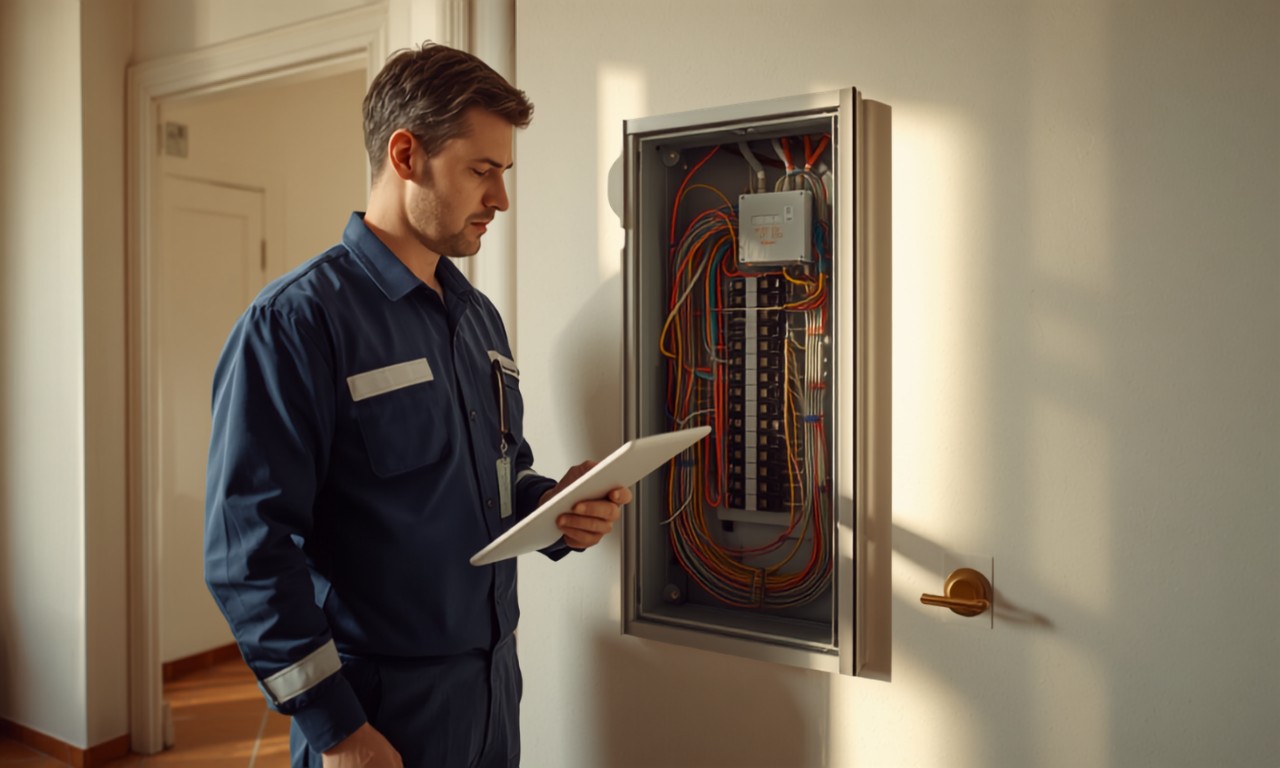
F-Gas certification (in Italy, "patentino F-Gas") is the mandatory qualification for anyone who installs, maintains, repairs or decommissions fixed refrigeration, air-conditioning and heat-pump equipment containing fluorinated greenhouse gases (F-Gas). It's not an "optional" qualification: without it, by law, a technician cannot work on the refrigerant circuit.
The Italian rules are set out in DPR 27 January 2012, no. 43 and DPR 16 November 2018, no. 146 (which updated the implementing framework for the European regulation). At EU level, the current reference is Regulation (EU) 2024/573, which came into force on 11 March 2024, replacing the previous Reg. (EU) 517/2014 and strengthening certification, traceability and HFC phase-down requirements.
This guide explains: what the certification is, who needs it, how to obtain it, how certification bodies accredited by ACCREDIA work, how the National Register of F-Gas certified persons and companies works, and what to watch out for regarding costs and course options.
What F-Gas certification is and what it's for
F-Gas certification is a personal certification (for the technician) accompanied by a company certification: both are needed to legally operate on systems containing the fluorinated gases listed in EU Reg. 2024/573.
The certification serves a dual purpose: environmental protection - HFCs can have a GWP thousands of times higher than CO2, and the EU phase-down aims to drastically cut their use - and operator safety when handling pressurized gases, which are often flammable in newer generations (A2L, A3).
The main reasons the certification is essential:
- Legal requirement (DPR 146/2018, EU Reg. 2024/573).
- Registration with the National F-Gas Register: without the certification you can't be registered as a certified person, and without a certified person the company can't obtain its own certification.
- Access to refrigerant purchases: distributors can only sell bulk fluorinated gases to companies holding a valid certification.
- Requirement for public tenders, contracts and maintenance specifications.
Who needs F-Gas certification
Under DPR 146/2018, the certification is required for anyone carrying out one or more of the following activities on fixed refrigeration, air-conditioning and heat-pump equipment, refrigerated truck and trailer units, fire protection systems and electrical switchgear containing F-Gas:
- leak checks;
- recovery of fluorinated gases;
- installation, maintenance, repair;
- decommissioning of the equipment.
Those required to hold the certification include, in particular:
- installers of refrigeration and air-conditioning systems;
- HVAC-R maintenance technicians;
- operators involved in gas recovery and disposal;
- technical managers of companies in the sector (who must ensure all operational staff are certified).
DPR 146/2018 provides for four certification categories (I, II, III, IV) depending on the amount of refrigerant and the type of activity: Category I is the broadest, qualifying the holder for all operations on any charge; lower categories limit operations to less critical work (e.g. leak checks without intervening on the circuit).
The role of ACCREDIA and certification bodies
In Italy, F-Gas certification is not issued directly by a public body: it's issued by Certification Bodies accredited by ACCREDIA (Italy's national accreditation body) under standard UNI CEI EN ISO/IEC 17024 for individuals and ISO/IEC 17021 for companies.
Only a certificate issued by an ACCREDIA-accredited body and recognized by the Italian Ministry of the Environment and Energy Security is valid for the purposes of DPR 146/2018. Anyone signing up for a course must therefore check the body's ACCREDIA accreditation before paying: a certificate of attendance from a non-accredited course is not F-Gas certification.
How to obtain F-Gas certification: requirements and procedure
The path set out in DPR 146/2018 is:
- Training with a recognized body: theory (regulations, refrigerant types, GWP, safety) and practice (leak detection, recovery, brazing, tightness tests).
- Theory exam on European/national regulations and refrigerant technology.
- Practical exam on real equipment: handling cylinders, using gauges, leak detectors, refrigerant recovery.
- Issuance of the personal certificate by the ACCREDIA-accredited body.
- Registration with the National F-Gas Register (the technician is registered as a certified person; the company must hold its own certification).
Anyone operating without certification, or through an uncertified company, is subject to the administrative penalties provided for under Legislative Decree 163/2019 (the penalty framework for EU Reg. 517/2014 and DPR 146/2018, in force since 17 January 2020). The amounts vary depending on the violation: for carrying out installation, maintenance, repair or decommissioning activities without the required certificate, fines of several thousand euros are provided for (up to tens of thousands for companies), along with a ban on continuing the activity until the situation is regularized. The full framework can be consulted in the Italian Official Gazette (Legislative Decree 5 December 2019, no. 163).
The National F-Gas Register
The National Register of F-Gas certified persons and companies (established by DPR 43/2012, managed by the Ministry of the Environment and Energy Security through Unioncamere / Chambers of Commerce) is the public database of all valid certifications in Italy.
What it contains:
- the list of certified technicians, with their category;
- the list of certified companies authorized to operate;
- intervention reports on systems with a significant F-Gas charge (installation, leak checks, recovery, decommissioning), to be submitted within 30 days.
Registration is mandatory and paid: without it, the certification effectively has no operational effect. Clients, refrigerant gas distributors and inspectors use the Register to check the validity of a certificate in real time.
The F-Gas course: how it works and what you learn
The F-Gas course is designed to provide in-depth knowledge of fluorinated gases and the importance of managing them responsibly.
During the course, students acquire skills on the various types of F-Gas, their applications and the associated regulations. Instructors explain best practices for maintaining and repairing systems that use these gases.
Topics covered include:
- Introduction to fluorinated gases, GWP, and the HFC phase-down under EU Reg. 2024/573.
- European (EU Reg. 2024/573) and national (DPR 43/2012, DPR 146/2018) regulations.
- Low-GWP refrigerants and new A2L / A3 blends: characteristics and updated safety requirements.
- Recovery, reuse and disposal techniques for gases.
- Safety procedures, leak checks and registration obligations under the National F-Gas Register.
The course is usually organized into interactive lessons, hands-on exercises and assessment tests to ensure the key concepts are understood.
F-Gas certification costs: how much it costs and what's included
The cost of obtaining F-Gas certification varies depending on the category (I-IV), the ACCREDIA-accredited body chosen, and whether training materials and the exam are included. Based on the published price lists of accredited training bodies, the indicative market price for Category I is between roughly €400 and €700 + VAT (course + exam), with the exam fee alone accounting for €300-450. Different tiers (categories II-IV) or company packages may have different prices: always ask the accredited body for an up-to-date quote.
Items typically included in the cost:
- Training materials and manuals.
- Access to lab equipment for hands-on exercises.
- Theory and practical certification exam.
- Issuance of the personal certificate.
On top of this, you need to factor in the annual administrative fee owed to the Chamber of Commerce for managing the F-Gas Database, provided for under art. 16 of DPR 146/2018: €21.00 per year for certified companies (regardless of the number of certified people within the company) and a similar amount for certified individuals when they don't work for a company subject to certification. Payment must be made by November of each year.
Free F-Gas certification: is it possible?
Obtaining F-Gas certification for free is a real possibility, but tied to specific requirements or circumstances: regional grants, funded courses for unemployed people, inter-professional funds for employees of member companies (e.g. Fondimpresa, Fondoprofessioni).
These opportunities vary considerably by region and local policy. Where available, funded courses generally cover enrolment, training materials and the final exam.
Checking with local employment agencies, trade associations and inter-professional funds is a good starting point. It's also worth keeping an eye on public calls for training and requalification programmes.
"Patentino condizionatori" (air-conditioner certification): differences and links to F-Gas
In everyday language, people often talk about a "patentino condizionatori" (air-conditioner certification) as a synonym for F-Gas certification: anyone working on the refrigerant circuit of a split air conditioner, a VRF system or a heat pump falls under the certification requirement set out in DPR 146/2018.
Work that doesn't touch the refrigerant circuit (e.g. cleaning filters, replacing a remote control, basic electrical checks) remains outside the F-Gas certification requirement, though it may require other qualifications under DM 37/2008 letters C or E if related to heating or gas systems.
F-Gas certification: validity, renewal and maintenance
The personal F-Gas certificate doesn't last indefinitely: the update rules (set out in DPR 146/2018 and ministerial guidelines) provide for periodic updates in line with regulatory and technical developments. EU Reg. 2024/573, in particular, introduced new training content related to low-GWP refrigerants and natural alternatives (CO2, propane, ammonia).
Key points to keep in mind for maintaining the certification:
- Updates on environmental regulations (EU Reg. 2024/573, HFC phase-down).
- Technological innovations in the sector (A2L / A3 refrigerants and safety requirements).
- Review of safety procedures.
- Consistency between the data on the National F-Gas Register and the activities actually carried out.
Frequently asked questions
Is F-Gas certification needed for all work on air conditioners? No. It's mandatory for all operations that touch the refrigerant circuit (installation, maintenance involving the gas, repair, leak checks, recovery, decommissioning). It's not needed for activities that don't affect the refrigerant, such as cleaning filters or replacing external electronic components.
Is personal certification enough, or is company certification also needed? Both are needed. DPR 146/2018 requires both the technician's personal certification (categories I-IV) and the company's certification: without the company certification, the certified technician cannot operate on behalf of the company, nor can the company purchase bulk refrigerant gas.
Who issues F-Gas certification? Not a public body, but an ACCREDIA-accredited Certification Body recognized under DPR 146/2018. You need to check the body's accreditation before enrolling in a course: a non-accredited certificate of attendance is not the same as F-Gas certification.
What is the National F-Gas Register? It's the public register provided for under DPR 43/2012, in which all F-Gas certified technicians and companies in Italy are recorded. It also contains the mandatory intervention reports on systems (installation, leak checks, recovery, decommissioning), which must be submitted within 30 days.
How long does it take to get the certification? The time varies depending on the category and the body, but it typically takes a few weeks between training, the theory exam and the practical exam. Category I (the broadest) is generally the longest path.
Is it valid abroad? Italian F-Gas certification issued under DPR 146/2018 is recognized under Regulation (EU) 2024/573, which standardizes certification requirements across the European Union. For actual operation in another member state, you should still check the local application of the rule.
What changes with EU Regulation 2024/573? The new regulation, in force since 11 March 2024, replaced Reg. 517/2014, accelerating the HFC phase-down, broadening the scope of equipment subject to certification (including some using natural refrigerants) and strengthening training requirements for working with new low-GWP refrigerants.
What happens if I work with refrigerant gases without certification? DPR 146/2018 provides for administrative penalties for both the technician and the uncertified company, as well as a ban on continuing the activity. A client relying on an uncertified technician also risks the system being found non-compliant and running into insurance issues.
Conclusion: why F-Gas certification is essential
F-Gas certification isn't a bureaucratic formality: it's what makes an HVAC-R technician legally able to operate on the refrigerant circuit of air conditioners and heat pumps, and it allows the company to be registered with the National F-Gas Register and to purchase refrigerant.
With Regulation (EU) 2024/573 now in force and the push towards low-GWP refrigerants, keeping the certificate up to date through ACCREDIA-accredited bodies is the most effective way to stay competitive, access public tenders and reduce the environmental impact of your fleet of systems.
Want to see it on your own workflow?
Free 6-week pilot with your technicians. Reply within 24 hours.